
Search is currently unavailable. To use search functionality, please accept cookies in your preferences.
Meet Opal Creek Ancient Forest Center
Hear more from the team at Opal Creek Ancient Forest Center to learn more about their mission, work and programs.
Written: Pablo van Renterghem
Edited: Sarah Stuart-Sikowitz, Matilde McCann
7 minutos leer
Opal Creek Ancient Forest Center
Feb 10, 2025
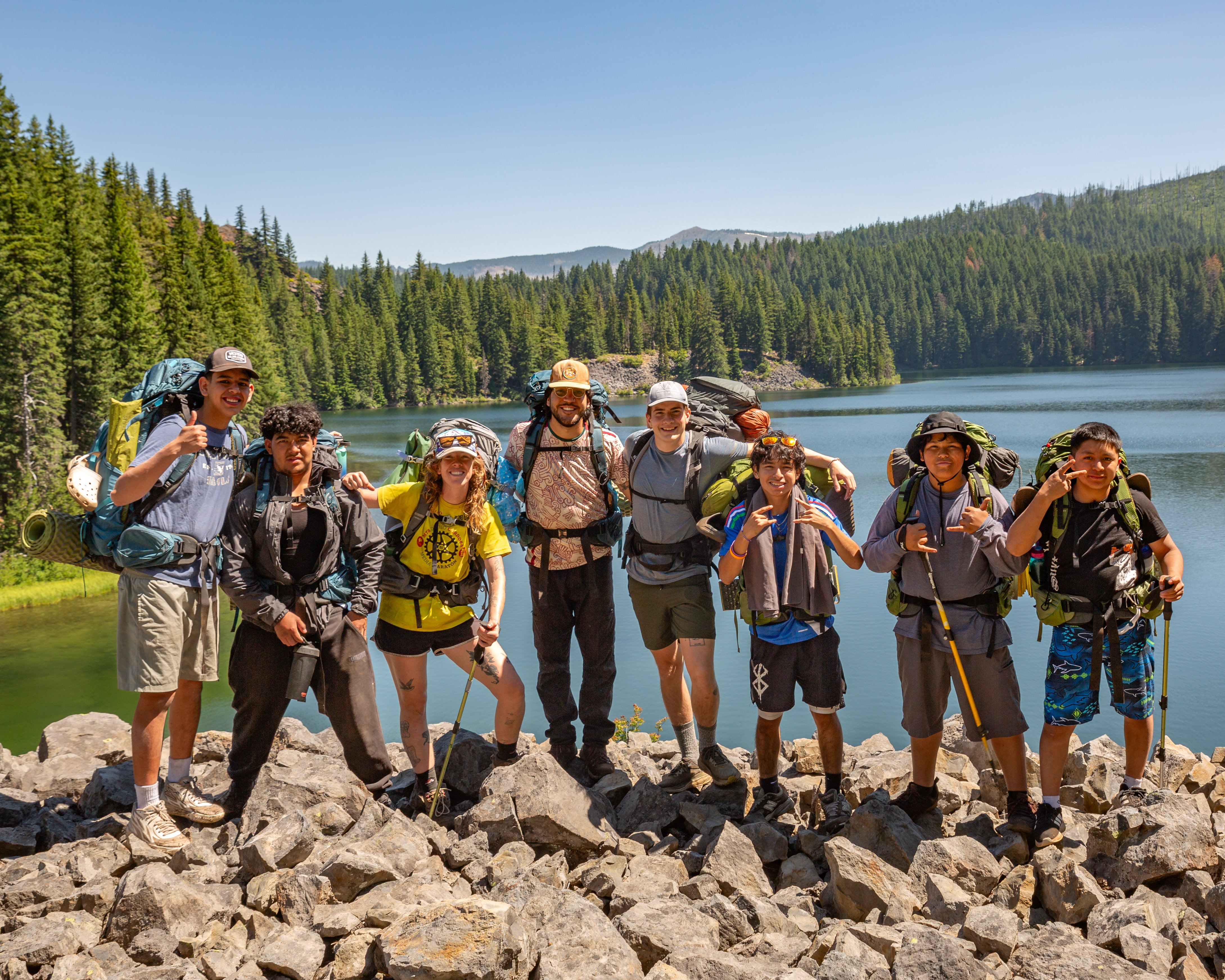
This summer marked a milestone for Opal Creek Ancient Forest Center: our first all-Hispanic backpacking trip, designed to immerse Spanish-speaking youth in the wonders of wilderness. Among the participants were two boys, one of whom had recently immigrated from Guatemala, the other immigrated at ten years old from Mexico. For both, this trip was filled with firsts. Neither had swum before, and while curious about the water, they were initially hesitant.
On the second day, armed with a scuba mask, they cautiously explored the shallow edges of a natural stream-fed pool in the Mount Jefferson Wilderness. When one of the boys ventured into deeper water and struggled to stay afloat, his determination to overcome fear inspired his companion and their backpacking guide, Johnathan Caraveo. By the third day, their hesitant splashes had transformed into confident doggy paddling, a joyful testament to their resilience.
This groundbreaking trip, supported by Osprey’s donated backpacks and funded by a grant from their school district, embodied the transformative power of nature and community.

The story of Opal Creek Ancient Forest Center has followed a similar path of growth and renewal. Rooted in Oregon’s Willamette National Forest, the Opal Creek Wilderness is one of the Pacific Northwest’s last stands of low-elevation rainforests. At its heart is Jawbone Flats, a 15-acre inholding once surrounded by towering Douglas firs, hanging mosses, and Opal Creek’s crystal-clear waters.
In the 1970s and ’80s, activists like George Atiyeh and Catherine Hartley Olcott fought to protect this unique area from logging, ultimately securing national attention and permanent protection. By 1988, Friends of Opal Creek, now Opal Creek Ancient Forest Center, was founded to safeguard this wilderness and connect people with its beauty. Over the next three decades, Jawbone Flats became a hub for transformative outdoor experiences, inspiring visitors of all ages.

That changed in 2020 when the Beachie Creek Fire devastated Jawbone Flats, reducing the lush old-growth forest to burned snags and a dense carpet of young regrowth. For our community, losing access to this beloved area has been deeply devastating, as it has long been a space for connection, learning, and healing. Yet, this loss forced our organization to pivot and mature, and we found new ways to fulfill our mission and engage people with wilderness. Although the Opal Creek Wilderness remains closed to the public, the recovering forest represents a new chapter—an opportunity to study resilience, renewal, and the ways both nature and communities adapt to change.
Like the forest, the organization has found a way to regrow—not as it was, but as something new. Opal Creek’s identity, once inseparable from Jawbone Flats, is evolving. While the return to Jawbone and rebuilding a new, smaller and more resilient campus will take years, the mission endures: to provide transformative wilderness experiences that grow a community of environmental advocates.
During the school year, Opal Creek offers outdoor education, and in the summer, it leads backpacking trips for youth ages 11–17. Programs continue to expand, including LGBTQ+ trips led by LGBTQ+ guides and initiatives to make the outdoors more accessible. Partnerships with outdoor brands and businesses help reduce barriers and costs for participants, making these experiences more inclusive.

This summer’s first all-Latino backpacking trip highlighted the organization’s commitment to connecting diverse communities with the wilderness. For many participants, it was their first experience hiking, camping, or swimming. The challenges of backpacking—carrying heavy packs, navigating unfamiliar terrain, and facing discomfort—became opportunities for courage and self-discovery. Each step on the trail fostered resilience, while shared experiences built a sense of camaraderie and belonging. The trip culminated with a rafting day on the McKenzie River accompanied by a family style meal of a Mexican favorite, carne asada. By the trip's end, participants not only gained outdoor skills but also a growing confidence in their abilities. They expressed it was comforting to have familiar food in the midst of so many challenging new experiences. This journey reinforced the transformative power of the wilderness as a space for growth, connection, and empowerment.
This growth is a two-way relationship. As much as we lead and facilitate these trips, our staff grow as well. As a guide on this trip, I experienced the transformative power of the wilderness. The fact that everyone was Spanish-speaking and of Latino heritage fostered a strong sense of community, making it easier to connect, share stories, and support one another. As one guide put it, “This trip made me feel more Mexican.” Our students did not experience the intimidation of being a newcomer in a sport our community rarely took part in, instead, we supported each other in the natural learning curve of a brand-new backpacking experience. We gained confidence, strengthened our leadership, and built meaningful, lasting relationships.

These journeys remind us that wilderness is far more than just a destination. It is a space for challenge, renewal, and profound transformation for everyone involved, inspiring personal growth and shared discovery that stays with us long after the trip ends. Whether our Latino roots come from immigration or being American-born, and despite the unique differences among us, we share a deep cultural connection. This bond goes beyond language, encompassing a profound sense of belonging.
We extend our heartfelt thanks to Osprey for donating backpacks to all participants and guides, helping to reduce barriers and make this transformative experience accessible to first-generation backpackers.

Video player
Cargando...
Mi cesta
Your Cart ()
No tienes ningún artículo en tu carrito.
You may also like
Subtotal:
Subtotal after discount:
Cargando...