
Search is currently unavailable. To use search functionality, please accept cookies in your preferences.
Unbreakable Will
Nearly two years after a heart attack threatened to end his ultrarunning days, one runner is chasing his biggest dream yet: crossing the finish line of the Western States 100.
9 minutos leer
Jun 23, 2025
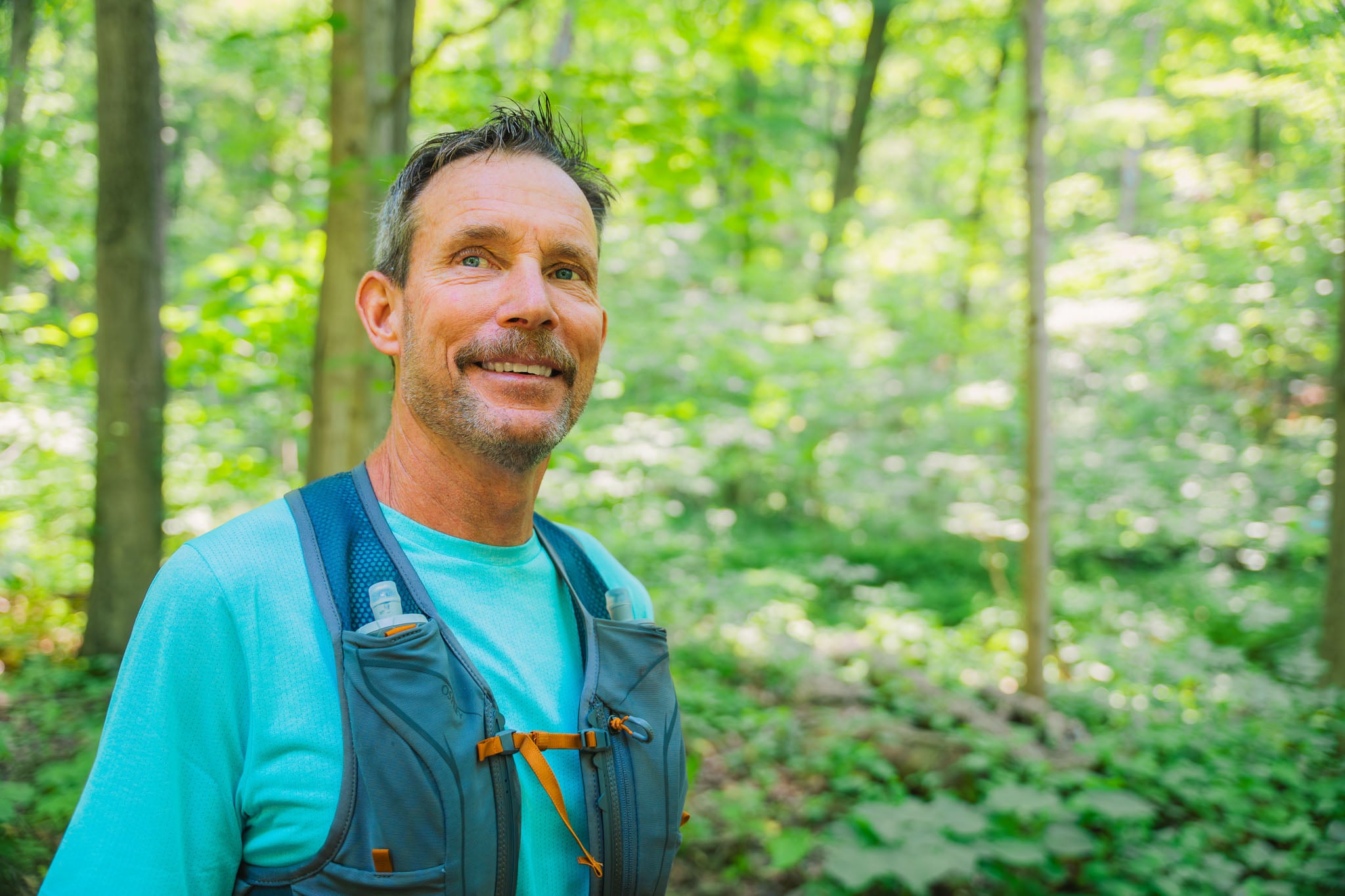
For as long as I can remember, my dad has been an ultrarunner. Not just someone who runs long distances, but someone who builds his life around the sport. He loves the solitude of the trail, the mental challenge of endurance, and the camaraderie that comes from sharing miles with others who get it.
Then, nearly two years ago, my dad faced a life-altering moment that threatened to put an end to his greatest passion: At just 54 years old and in peak physical condition, my dad had a heart attack. It was as shocking as it was devastating. While we were incredibly fortunate that he recovered, one question lingered: would he ever be able to run ultras again?

The Reality of Running Post-Heart Attack
After a slow and uncertain recovery, my dad resumed running with unwavering determination, adjusting to the realities of his body and accepting that his heart—and his physical limits—may never be the same. In the aftermath, he developed atrial fibrillation and flutter, two conditions that disrupt the heart’s rhythm—AFib causing rapid, irregular beats, while atrial flutter follows a fast but more structured pattern. Both left him depleted and weakened after even the shortest run. For a long time, every stride felt like an insurmountable hurdle. It wasn’t just about rebuilding fitness; it was about learning to trust his body again.
Yet, despite the uncertainty clouding his future, he pushed forward with a remarkably positive mindset—one rooted in living each day with purpose and intention. And when it came to running? His goal was simple: to show up and give it his best.
Western States Endurance Run
Despite his setbacks, one race had always remained at the top of his list: the Western States Endurance Run (WSER). Known as the oldest 100-mile trail race in the world, Western States is a bucket-list event for ultrarunners. Its course stretches from Olympic Valley to Auburn, California, crossing the rugged Sierra Nevada with over 18,000 feet of elevation gain. It’s as iconic as it is unforgiving.

Earning a spot in Western States is no easy feat. The race uses a lottery system that thousands enter every year. Runners must first qualify by completing a designated 100K or 100-mile race, but even then, it’s a gamble. My dad had entered the lottery seven years in a row without his name being drawn. But this past December, he had a feeling.
For over an hour, he sat in front of the computer, watching the livestream as names were called. At one point, he stepped away to help a customer—he runs a small masonry contracting business, and someone had arrived to pick up materials. My mom, brother, and I kept watching. And then, we heard it:
“Ken Slagter, from Hamilton, Ontario.”
We jumped up, adrenaline surging as his phone erupted with messages and missed calls. I ran outside, right in the middle of his sale, and blurted out the news. His face lit up—pure shock, elation, disbelief, joy.
But then came the harder question: could his heart handle the level of training required to race WSER?

Training for the Western States Endurance Run
Training for a 100-mile race is never easy. Training for one after a heart attack—at age 56, with the pressure of a once-in-a-lifetime opportunity—is something else entirely.
From day one, he approached it with caution. A heart monitor strapped to his chest on every run, meticulous notes tracking his progress, constant communication with his cardiologist to ensure he was staying within safe limits. He was smart. Careful. Committed.
And the effort was paying off. Week after week, his strength was returning and his endurance was building. He felt good—better than he had in a long time. The thought of toeing the starting line at Western States wasn’t just a hope anymore; it was becoming real.
Things were going well. Until they suddenly weren’t.
While running a fast descent on an unfamiliar trail, he clipped a tree with his shoulder and slammed to the ground. He was sure he broke his arm. Without his phone, he flagged down a stranger and had them call an ambulance. The arm wasn’t broken, but the damage was still significant. For months, he’s barely been able to lift it. The bounce from running made it throb in pain, and the nights after a training run meant hours of sleepless discomfort.
His training came to a near standstill. For weeks, he had no choice but to rest—not because he wanted to, but because his body demanded it.
But giving up? That was never an option. He now uses his running vest to keep his arm tight to his chest, limiting movement and minimizing pain. Slowly, carefully, he began rebuilding. Every run carries risk—the fear of falling, the possibility of worsening the injury. But the thought of not trying? Of watching Western States slip away without even stepping up to the starting line?

That was a pain he refused to live with.
Chasing a Dream
There’s so much about this journey that is uncertain. Whether his heart and body will cooperate. Whether the pain will hold off long enough to reach the finish line. But there’s one thing I do know:
My dad is already doing something incredible. He’s chasing his dream with courage, grit, and heart—literal and metaphorical. The pain in his arm lingers, the discomfort remains, but it hasn’t stopped him. Neither has the new reality of his heart, the risks, or the doubts. He still trains, still pushes forward, refusing to let anything define what he’s capable of.
And no matter what happens on race day, that will never be a loss.

A couple of miles before Devil’s Thumb aid station—around mile 50, the symbolic halfway point of the Western States Endurance Run—Ken began to experience alarming complications.
Up until then, Ken had been moving beautifully through the canyons. For the first 50 miles, he was steady, smiling, and in control—well-hydrated, well-fed, and running strong. The switch was abrupt: a reminder of just how unpredictable endurance racing can be, especially post-heart attack. When Ken reached Devil’s Thumb, the medical team, concerned about his medical history and current symptoms, made the difficult but necessary call to pull him from the race.
This isn’t a story of failure. It’s a story of courage and resilience. Ken showed up ready, gave everything he had, and ran an incredible first half of the race. Now, as he undergoes testing to better understand what happened, his spirit remains unshaken—and so does the dream of returning to Western States once more.
Photo Credit: Kendra Slagter
Video player
Cargando...
Mi cesta
Your Cart ()
No tienes ningún artículo en tu carrito.
You may also like
Subtotal:
Subtotal after discount:
Cargando...